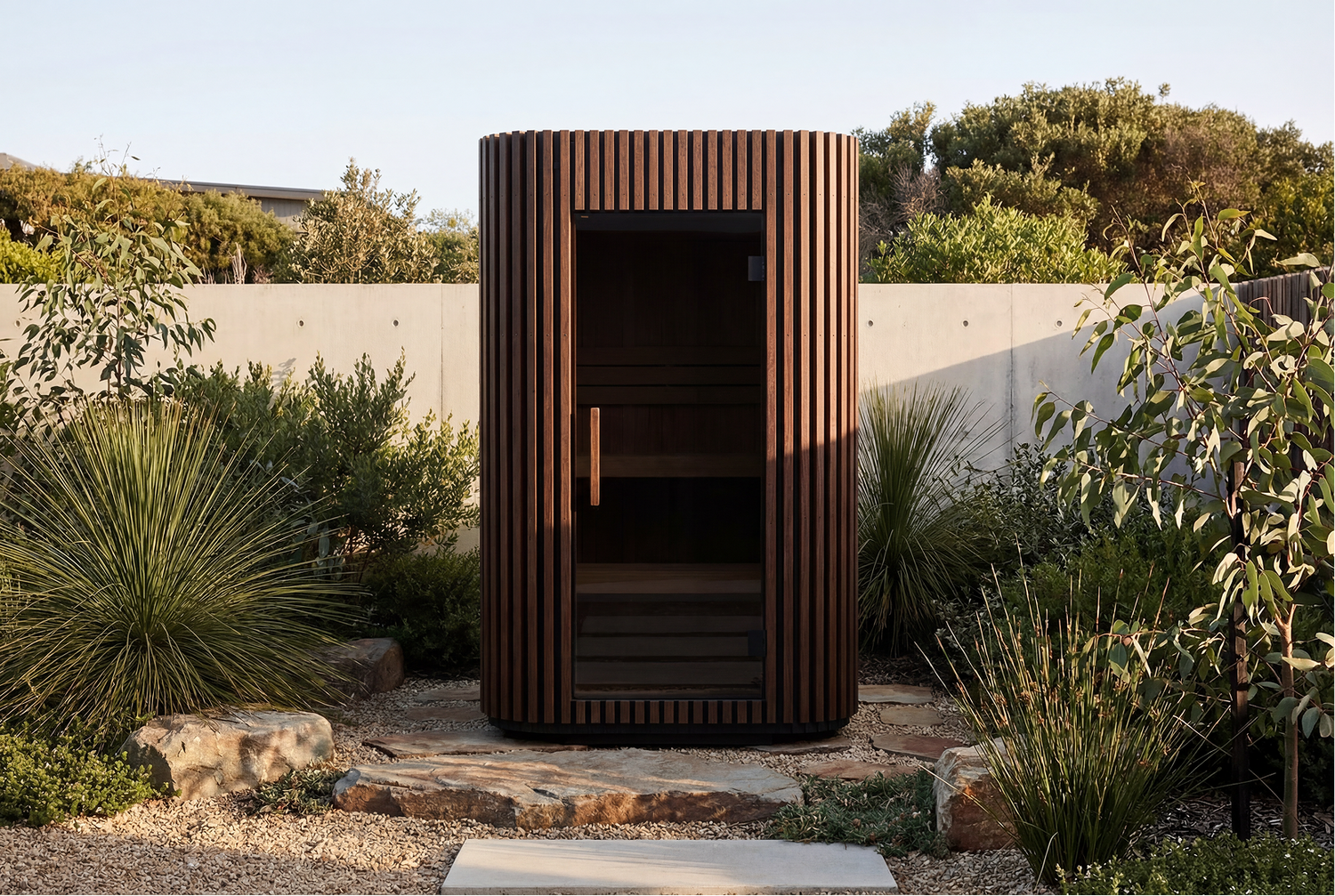
Great sauna design begins with an understanding of how heat behaves in space and how the body naturally occupies that space. In the Elata Sauna, the layout is not decorative or incidental. It is the organising framework that determines how warmth forms, settles, and is experienced over time. Bench height, ceiling volume, heater placement, and ventilation are planned together so the heat feels stable, even, and quietly immersive rather than sharp or uneven.
When these elements are misjudged, heat becomes patchy. The head overheats while the legs remain cool. Air stagnates. The experience shifts from restorative to uncomfortable. Elata is designed to avoid those compromises.
This is heat as an architectural quality, not simply a number on a thermostat.
Bench Height: Positioning the Body in the Thermal Layer
In any sauna, warmer air rises and stabilises toward the upper third of the cabin. If benches are positioned too low, much of the body sits in cooler air, leaving the legs and torso under-heated while only the upper shoulders receive full warmth. This creates a vertical temperature gradient where the head experiences significantly more heat than the lower body.
In the Elata Sauna, the benches are positioned deliberately inside this upper thermal layer so the body occupies the most consistent band of temperature. The back, chest, and shoulders remain fully inside the warmest zone, while the lower legs still receive meaningful heat rather than dropping into a cool layer near the floor.
This supports true whole-body warmth rather than an uncomfortable head-dominant heat profile. It reduces the sensation of stratification and allows the user to sit naturally without needing to constantly shift position. When the body is placed correctly in the thermal profile, the heat feels steady and immersive.
Ceiling Volume: Controlling the Thermal Envelope
Ceiling height plays a critical role in how heat distributes through the room. When the ceiling is too tall, a disproportionate volume of hot air collects above head height where it cannot be used. The heater then works harder to maintain temperature, energy consumption rises, and the gradient between head, chest, and feet becomes more pronounced.
Elata avoids this by using a controlled ceiling height and compact interior volume. By limiting unused air above the thermal zone, the cabin reaches temperature more efficiently and maintains a tighter, more stable heat band across the seated body. The temperature difference between feet, torso, and head is reduced, which leads to a calmer, more balanced experience.
This is not simply about efficiency. A disciplined interior volume prevents the common problem of an over-heated head and under-heated lower body. The heat becomes balanced rather than top-heavy, and the environment remains stable across longer sessions without unnecessary heat loss.
Heat Column: Building Warmth From the Ground Up
The heater in the Elata Sauna is positioned low within the cabin so the convection column, the upward movement of hot air, begins at floor level. As the heater warms the air, that air rises through the space, circulates, and settles evenly around the user. When heaters are positioned too high, the convection pattern becomes distorted and warm air tends to accumulate above the seated position rather than surrounding it.
Elata uses a correctly sized 6 kW heater, allowing the cabin to comfortably sustain authentic 85°C sessions. This means the heat remains stable even when the door opens briefly or when multiple users are present. There is enough thermal reserve to maintain performance without spikes or collapses in temperature.
The goal is not aggressive heat. It is predictable, consistent heat that allows the user to sit, breathe, and relax without the environment drifting from too mild to too intense.
Ventilation for Heat Mixing and Thermal Balance
Ventilation does more than refresh air. When correctly positioned, it also helps reduce thermal stratification inside the cabin. A small amount of controlled airflow encourages the upper and lower air layers to mix, reducing the difference between head-level and foot-level temperatures.
In the Elata Sauna, ventilation points are positioned to support this gentle mixing effect without stripping heat from the room. The result is a more even temperature field within the cabin, helping the experience feel balanced rather than layered or uneven.
This subtle circulation contributes to comfort without introducing noticeable drafts or cooling.
Ventilation for Air Quality and Breathing Comfort
Air quality plays an equally important role in sauna comfort. In a small heated space, the body’s breathing rate naturally increases. Without adequate ventilation, CO₂ can begin to accumulate at head height, leading to sensations of heaviness, fogginess, or drowsiness, even if the temperature itself is comfortable.
Elata is designed with four dedicated ventilation points, including fresh-air inlets near the heater and dual outlets on the opposing wall. This supports continuous oxygen turnover while preserving the heat envelope. Incoming air is warmed immediately at the heater before rising into the breathing zone, and stale air is gradually removed rather than being allowed to stagnate.
The result is warmth that feels clear rather than stuffy. The user experiences heat without the discomfort associated with stale or oxygen-poor air.
One System, One Experience
Each of these elements, bench position, interior volume, heater placement, and ventilation, matters on its own. But their true value lies in the way they function together as a single thermal system.
Elata is designed so the body meets the heat in a controlled and balanced way. The experience is not improvised or left to chance. It is quiet, even, and intentional. The sauna is judged not only by how it looks in the garden, but by what it feels like to sit inside it: the steadiness of the warmth, the clarity of the air, and the sense that nothing needs to be adjusted or corrected.
Heat becomes atmosphere rather than intensity. And the space supports calm, repeatable, deeply human ritual.